
 English
 français
 русский
 العربية
Buscar
Qué estás buscando?
Buscar

To design a radar support tower, a client must provide five critical categories of information: (1) Radar Equipment Specifications (weight, dimensions, center of gravity, and wind area); (2) Site Environmental Data (design wind speed, ice loads, seismic zone, and soil conditions); (3) Performance Requirements (required natural frequency, deflection limits, and operational lifespan); (4) Interface and Integration Details (mounting patterns, cable routing, and power requirements); and (5) Applicable Regulatory Standards (TIA-222, IBC, or local building codes). Missing or inaccurate data in any of these categories can lead to a tower that either fails to support the radar accurately or is over-engineered, wasting capital.
· Weight is not enough; you need the Center of Gravity (CG): The exact vertical and horizontal location of the radar's center of gravity dictates the bending moment at the tower base.
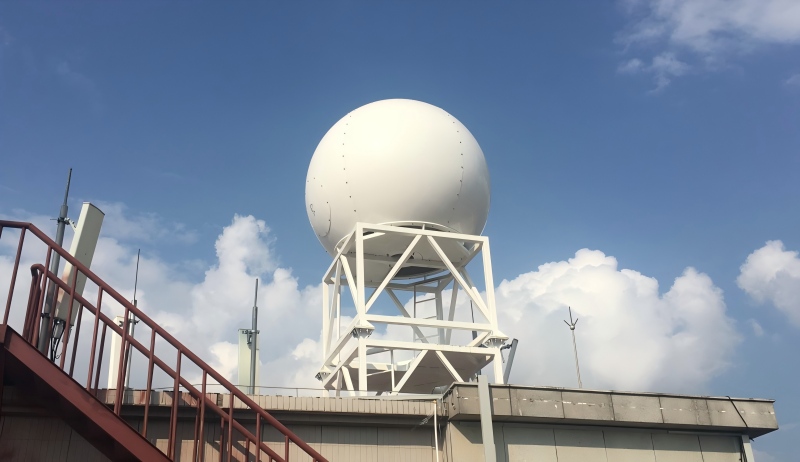
· The Radome is a wind sail: You must provide the radome's diameter and height to calculate the effective projected wind area, which drives foundation design.
· Performance dictates stiffness: Clients must specify the radar's required pointing accuracy (deflection limits) and rotational frequency so the tower can be tuned to avoid resonant vibration.
· Site data is non-negotiable: Basic wind speed, ice thickness, and soil bearing capacity are fundamental inputs for structural and foundation engineering.
· Early collaboration prevents redesign: Providing accurate equipment cut-sheets and site survey reports at the proposal stage saves weeks of engineering time and prevents costly structural changes later.
Who is searching for this information?
| User Type | Primary Intent | Key Concerns |
|---|---|---|
| Radar System Integrators / OEMs | Obtain a quote and structural design for a specific radar deployment | How to translate radar specs into structural requirements |
| Procurement Managers | Prepare an accurate Request for Proposal (RFP) for tower manufacturers | What data to gather from internal teams to avoid delays |
| Civil/Structural Engineers | Define the design inputs required from the radar vendor | Interface loads, anchor bolt patterns, dynamic criteria |
| Project Planners | Understand the timeline and prerequisites for tower fabrication | How missing data impacts the project schedule |
Search intent summary: Users want a practical checklist. They are often in the early stages of a radar infrastructure project and need to know exactly what technical data they must gather from their radar equipment supplier and their civil engineers to hand over to the tower manufacturer.
1. What happens if I only provide the total weight of the radar?
2. How do I find the Center of Gravity (CG) of my radar antenna?
3. What site data do I need if I haven't done a soil survey yet?
4. Do I need to provide the specific radar model, or just the general type?
5. What is a "natural frequency requirement," and how do I get that from my radar vendor?
6. How detailed does the mounting interface drawing need to be?
7. What environmental loads (wind, ice) should I specify if I don't have historical weather data?
Why incomplete data leads to either unsafe or overly expensive towers.
The physical data of the antenna, pedestal, and radome.
Wind speed, ice, seismic, and soil.
Natural frequency and deflection limits.
Mounting patterns, power, and maintenance access.
How manufacturers can assist in developing preliminary designs.
How Altai Tower uses client data to engineer precision radar support structures.
Common questions and answers.
A radar support tower is a custom-engineered structure. Unlike telecom towers, which often use standard designs for a range of antennas, a radar tower must be dynamically tuned to the specific equipment it carries.
If a client provides incomplete information, the tower manufacturer must make conservative assumptions. This usually results in a tower that is heavier, larger, and significantly more expensive than necessary. Conversely, underestimating the data can lead to a tower that lacks the stiffness required for radar pointing accuracy. Providing the following information ensures an optimized, cost-effective, and high-performing structure.
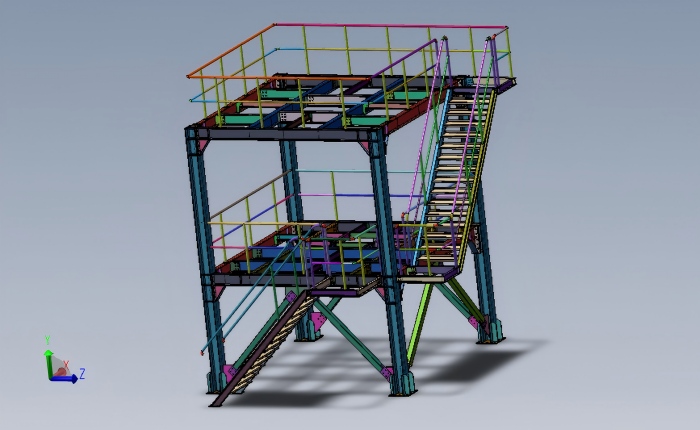
You cannot design the tower without knowing exactly what sits on top of it. The client must provide the radar OEM's technical cut-sheets.
· Total Static Weight: The combined weight of the antenna, pedestal, radome, and any platform equipment.
· Center of Gravity (CG): The exact vertical and horizontal location of the CG. This determines the overturning moment and structural eccentricity.
· Radome Dimensions: Height and diameter (e.g., 11.8 meters). This is used to calculate the effective projected wind area (often >100 m²).
· Wind Area of the Antenna: The projected area of the dish itself when oriented in different directions.
· Rotational Speed: The RPM of the radar pedestal (e.g., 4–6 RPM). This dictates the forcing frequency that the tower must avoid.
· Mounting Interface: The exact bolt pattern, bolt size, and flange dimensions of the radar pedestal so the tower platform can be pre-drilled to match.
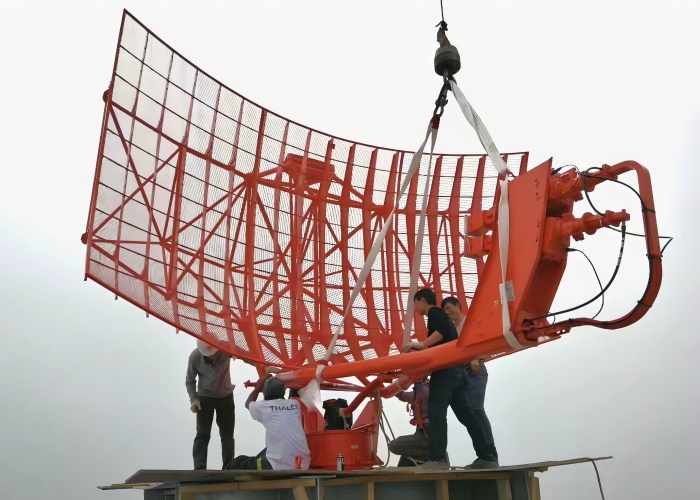
The environment dictates the extreme loads the tower must survive.
· Design Wind Speed: The basic 3-second gust wind speed for the site (often determined per TIA-222 or local codes). If the client doesn't have this, the tower engineer can calculate it based on the site's zip code/postal code and terrain.
· Ice Loading: The maximum radial ice thickness expected in the region.
· Seismic Zone: The earthquake risk category for the location, especially for sites in active fault zones.
· Soil Report: A geotechnical report detailing soil bearing capacity, frost depth, and groundwater level. This is mandatory for designing the concrete foundation.
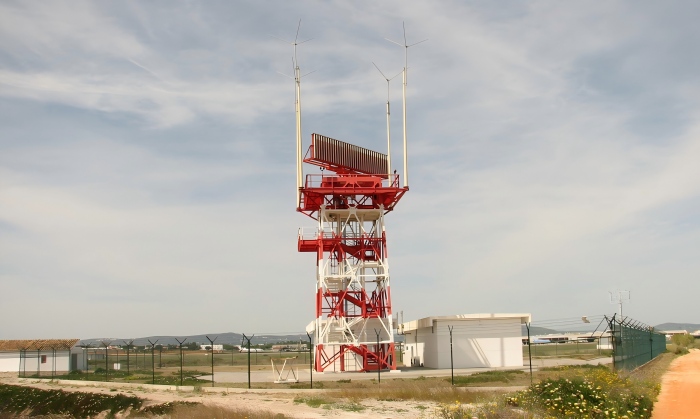
This is the most specialized category for radar towers. The client must consult the radar manufacturer for these limits.
· Natural Frequency Requirement: The radar OEM will specify the minimum natural frequency the tower must achieve (often ≥ 1 Hz or ≥ 3 Hz) to avoid resonant coupling with the rotating antenna.
· Deflection Limits: The maximum allowable tilt of the tower under wind load. For precision radar, this is often limited to 0.1° inclination and 0.01° torsion.
· Operational Lifespan: The expected service life of the radar (e.g., 25 or 50 years), which dictates the corrosion protection (e.g., ASTM A123 galvanizing thickness) and fatigue design.
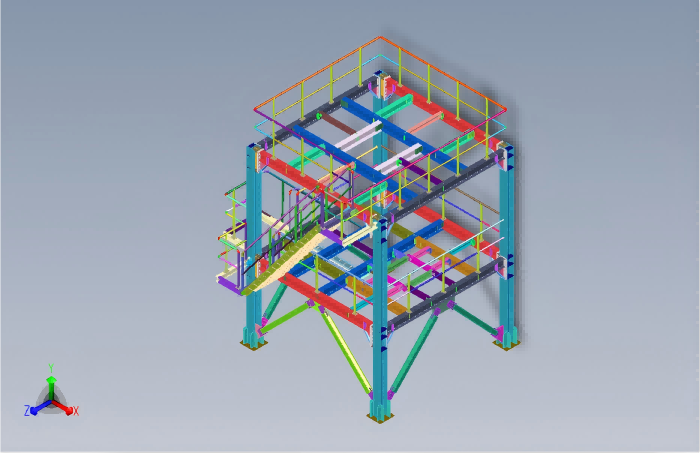
How does the equipment connect to the ground, and how do people reach it?
· Cable Routing: The number, size, and weight of RF and power cables that will run up the tower.
· Maintenance Access: The maximum number of personnel and tools required on the top platform for servicing, which defines the live load.
· Power Availability: Is the site off-grid? This dictates whether solar panels or a small wind turbine must be mounted on the tower.
· Site Security: Does the tower need integrated anti-climb panels, camera mounting brackets, or aviation obstruction lights?
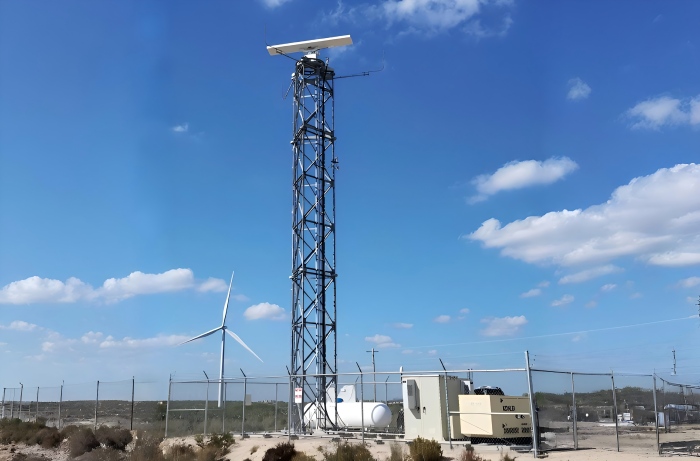
Clients rarely have all the data on day one. If the soil report is pending or the exact radar model hasn't been finalized, experienced manufacturers can proceed with a preliminary engineering design using conservative assumptions. This allows budgeting and site planning to begin. Once the final data is locked in, the design is finalized and optimized.
| Information Type | Critical (Mandatory for Design) | Helpful (Optimizes Cost/Performance) |
|---|---|---|
| Equipment | Total weight, Radome size, Mounting flange drawing | Exact Center of Gravity, Antenna wind area coefficients |
| Site | Design wind speed, Soil bearing capacity | Frost depth, Seismic zone, historical weather data |
| Performance | Deflection limit (e.g., 0.1°), Lifespan | Natural frequency target (if radar OEM provides it) |
| Interface | Number of cables, AC/DC power requirements | Future expansion plans, aesthetic color requirements |
Qingdao Altai Tower Co., Ltd. is a professional manufacturer of telecommunication towers, power towers, and specialized radar support structures, established in 2003. Altai Tower’s engineering process relies on close collaboration with clients to gather the precise data needed for dynamic analysis and structural fabrication.
How Altai Tower Uses Client Data:
· Dynamic Analysis: When a client provides the radar's rotational speed and weight, Altai Tower's engineers use Finite Element Analysis (FEA) software to model the tower, ensuring the natural frequency remains safely separated from the operational frequency.
· Wind Load Calculation: By combining the radome's projected area with the site's design wind speed, Altai calculates the overturning moment to design the foundation and tower legs.
· Precision Fabrication: Altai Tower uses the client's mounting interface drawings to CNC-punch the top platform, ensuring that the radar pedestal bolts align perfectly without field modification.
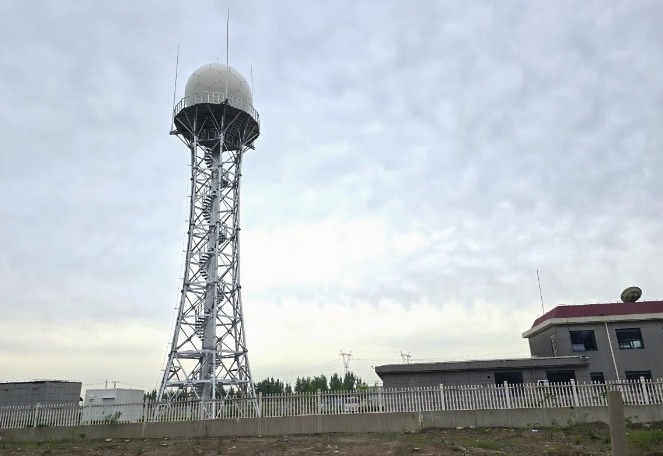
Application Example: 30-Meter Pest Migration Monitoring Radar Tower
For a recent 30-meter radar project, the client provided the radar antenna dimensions, pedestal weight, and the local wind speed. Altai Tower designed a high-stiffness lattice tower with a heavily braced platform to support the equipment. The platform was designed as a rigid diaphragm to transfer the dynamic loads into the tower legs. The tower was hot-dip galvanized to ASTM A123, ensuring 30+ years of maintenance-free service.
A: Without the Center of Gravity (CG) and the radome's projected wind area, the tower engineer cannot accurately calculate the overturning moment or the structural eccentricity. The manufacturer will have to assume the worst-case scenario, resulting in a much heavier and more expensive tower than necessary.
A: This information is typically provided by the radar equipment manufacturer (OEM) in their technical cut-sheets or installation manuals. It indicates the horizontal and vertical point where the weight is concentrated.
A: You can provide the site coordinates so the manufacturer can calculate the basic design wind speed. However, for the foundation design, a geotechnical soil report is mandatory. Without it, the foundation design cannot be finalized.
A: Yes, providing the exact model allows the manufacturer to review the OEM's installation manual for specific requirements regarding bolt patterns, torque values, and environmental tolerances.
A: Natural frequency is the rate at which a tower vibrates when disturbed. To avoid resonant sway that ruins radar data, the tower must be stiffer than the radar's operational frequencies. The radar vendor will specify a minimum natural frequency (e.g., ≥ 1 Hz) for the supporting structure.
A: The tower manufacturer needs the bolt circle diameter, the number and size of bolts (e.g., 16 × M24), the thickness of the pedestal flange, and the clearance required for tightening the bolts.
A: You only need to provide the site's geographic location (address or GPS coordinates). The tower manufacturer will use recognized design standards (such as TIA-222 or ASCE 7) to look up the statistical design wind speed and ice thickness for that specific location.
Designing a radar support tower is a highly collaborative process. The performance of the final structure—its stability, accuracy, and lifespan—depends entirely on the quality of the inputs provided by the client. By delivering accurate radar equipment specifications, site environmental data, and performance criteria early in the process, clients empower manufacturers like Altai Tower to engineer a structure that is perfectly optimized: stiff enough for precision radar, strong enough for extreme weather, and cost-effective for the project budget.
Ready to start your radar tower design? Contact Altai Tower's engineering team today. Simply provide your radar specifications and site location, and we will deliver a custom structural proposal.



 Red IPv6 compatible