

 English
 français
 русский
 العربية
Buscar
Qué estás buscando?
Buscar

La fabricación híbrida en el diseño de torres de acero angular es la combinación estratégica deperfiles angulares laminados en caliente estándarymiembros acumulados(fabricadas a partir de placas de acero) dentro de una única estructura de torre. Este enfoque permite a los ingenieros utilizar secciones laminadas rentables y fácilmente disponibles para elementos de menor tensión, mientras que se despliegan secciones compuestas de mayor capacidad, como las cruciformes,Configuraciones en forma de T y con listones en forma de estrella.—para componentes sometidos a cargas elevadas donde los ángulos estándar resultan insuficientes. El resultado es una torre que cumple con todos los requisitos estructurales gracias a un uso optimizado de los materiales, una menor complejidad de fabricación y un menor coste total. Al seleccionar el tipo de sección más eficiente para cada función estructural, la fabricación híbrida ofrece un ahorro de peso del 10 al 20 % en comparación con los diseños que se basan exclusivamente en perfiles laminados o compuestos.
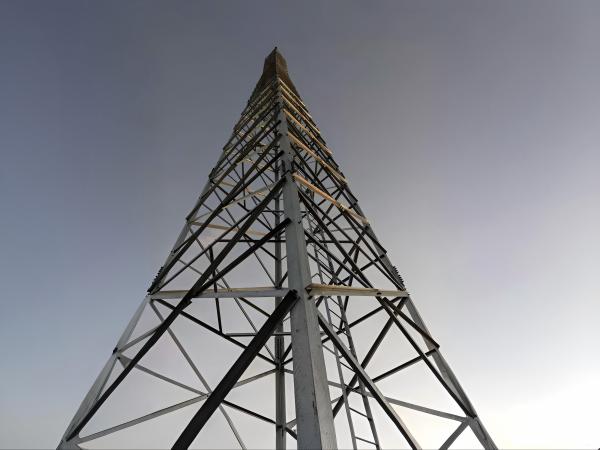
Los perfiles laminados son la opción económica básica:Los perfiles angulares laminados en caliente estándar (Q235B, Q345B, Q420) ofrecen propiedades mecánicas predecibles, reglas de diseño probadas y una disponibilidad rentable para la mayoría de los elementos de torres.
Los miembros consolidados abordan las deficiencias de capacidad:Cuando los ángulos simples no pueden proporcionar suficiente capacidad de carga, las secciones compuestas (cruciformes, en forma de T, con listones en forma de estrella) ofrecen la resistencia requerida sin necesidad de laminar a medida secciones de gran tamaño.
El diseño híbrido optimiza la relación coste-rendimiento:Aplicar el tipo de sección adecuado en el lugar correcto (ángulos laminados para arriostramientos y elementos secundarios, secciones compuestas para patas sometidas a cargas elevadas y diagonales principales) logra el equilibrio óptimo entre costo y eficiencia estructural.
El acero de alta resistencia amplifica la ventaja:El uso de grados Q420 o superiores en elementos compuestos puede reducir aún más el peso, y los estudios muestran una reducción de peso de hasta un 20 % al reemplazar S355 por S460 en diseños comparables.
Las reglas de diseño están madurando:Proyectos de investigación recientes como ANGELHY han desarrollado nuevas reglas de diseño económicas tanto para ángulos simples como para elementos compuestos, proporcionando a los ingenieros una guía fiable para diseños híbridos.
Las consideraciones de fabricación difieren:Los perfiles laminados requieren un procesamiento mínimo; los elementos compuestos exigen operaciones adicionales de soldadura, perforación y ensamblaje, costos que deben justificarse por las mejoras en el rendimiento.
Los ángulos estándar laminados en caliente de lados iguales —con longitudes de lado de hasta 300 mm para torres altas— son los elementos básicos tradicionales de las torres de celosía. Estas secciones se producen en acerías bajo condiciones controladas, ofreciendo:
Propiedades mecánicas predecibles:Resistencia a la fluencia, ductilidad y tenacidad consistentes.
Reglas de diseño comprobadas:Métodos de cálculo bien establecidos según Eurocódigo 3, GB 50017 y ASCE/SEI 10-15.
Eficiencia de costos:Las economías de escala en la producción hacen que los ángulos laminados sean la opción más económica para la mayoría de los miembros.
Disponibilidad:Las secciones estándar están fácilmente disponibles en múltiples proveedores.
Entre los grados de acero más comunes se encuentran el Q235B, el Q355B y el Q420, y las variantes de alta resistencia se utilizan cada vez más en torres de transmisión y telecomunicaciones.
Los elementos compuestos se fabrican a partir de placas de acero o múltiples perfiles angulares unidos entre sí para formar una sección compuesta con mayor capacidad de carga que cualquier perfil laminado individual. Las configuraciones comunes incluyen:
| Configuración | Descripción | Aplicación típica |
|---|---|---|
| En forma de cruz | Dos ángulos conectados punta con punta para formar una sección en forma de cruz. | Pilares principales de torres de transmisión de extra alta tensión |
| en forma de T | Dos ángulos conectados espalda con espalda en una configuración en T. | Elementos de compresión primarios en torres altas |
| Con barandilla de estrellas | Dos cordones angulares conectados por placas de listón | Refuerzo de elementos existentes; cargas de compresión muy elevadas. |
| Uno tras otro | Dos ángulos conectados a lo largo de sus piernas | Elementos a compresión donde la resistencia al pandeo es crítica |
Los miembros acumulados son particularmente valiosos cuando:
Los tamaños de sección requeridos superan las dimensiones disponibles laminadas en caliente.
Las cargas de compresión muy elevadas exigen una mayor capacidad.
Las torres existentes necesitan ser reforzadas sin necesidad de reemplazar elementos completos.
Se necesitan propiedades de sección personalizadas para condiciones de carga específicas.
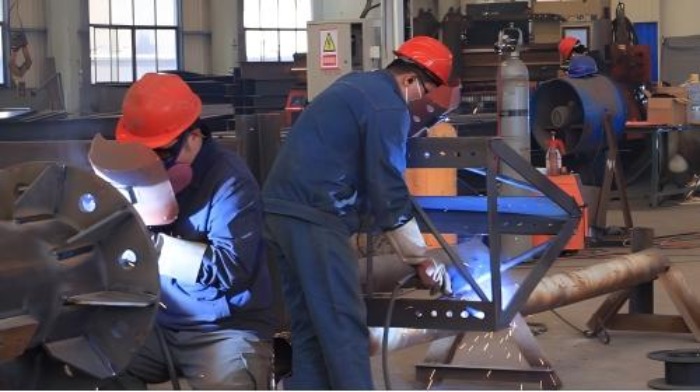
El principio fundamental de la fabricación híbrida esseleccionar el tipo de sección más eficiente para cada función estructuralEn una torre de celosía típica:
| Región de la Torre | Tipo de miembro típico | Razón fundamental |
|---|---|---|
| Patas principales (secciones inferiores) | Construido (en forma de cruz o de listones estrellados) | Las cargas de compresión más elevadas exigen la máxima capacidad. |
| Patas principales (secciones superiores) | Ángulos laminados (tamaños más grandes) | Las cargas disminuyen con la altura; las secciones laminadas son suficientes. |
| diagonales primarias | Ángulos laminados o construidos (zonas de alta carga) | Ángulos estándar para la mayoría; reforzados para cargas extremas. |
| Refuerzo secundario | Ángulos laminados (tamaños más pequeños) | Cargas bajas; la rentabilidad es primordial. |
| Brazos cruzados | Ángulos enrollados | Cargas moderadas; las secciones estándar son económicas. |
Este enfoque gradual —con secciones construidas más pesadas en la base, donde las fuerzas son mayores, y secciones laminadas más ligeras hacia la parte superior— reproduce la distribución natural de la carga de una torre en voladizo y optimiza el uso del material en toda la estructura.
La decisión de especificar un elemento compuesto en lugar de un ángulo laminado se debe a varios factores:
· Section availability:When the required section size is not economically available as a hot-rolled product
· Buckling considerations:When the effective slenderness of a single angle is too high, and a built-up section provides better stability
· Strengthening existing towers:When adding capacity to an in-service tower without replacing primary members
The economic trade-off between rolled and built-up members is not always straightforward:
· Rolled sectionshave lower fabrication costs but may require more material if the section must be oversized to meet capacity requirements
· Built-up membershave higher fabrication costs (welding, drilling, assembly) but can achieve the required capacity with less material
Research has shown that the factor with the highest contribution to decision-making between built-up and hot-rolled proposals isthe base price of raw material for each optionin the market. When steel prices are high, the material savings of built-up members become more attractive; when fabrication costs dominate, rolled sections may be preferred.
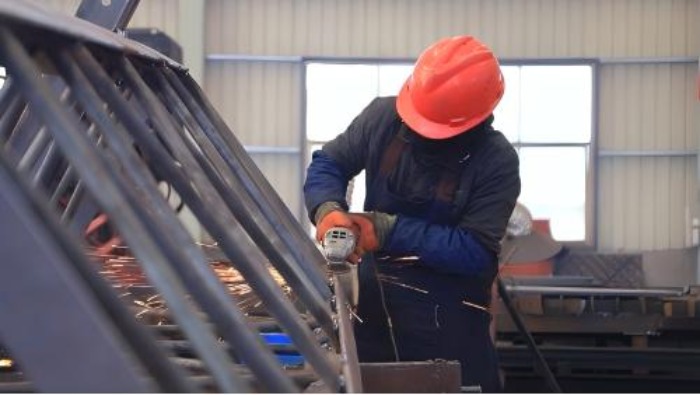
The use of high-strength steel grades—particularly Q420—has transformed the economics of hybrid fabrication. In extra-high-voltage transmission towers, Q420 large-size angle steel can often substitute for double-spliced or multi-spliced common angle steel members, reducing fabrication by multiples and significantly decreasing the number of connection bolts and filler plates.
The ANGELHY research project demonstrated that using S460 high-strength steel (comparable to Q420) in a typical transmission tower reduced total weight from 66 tonnes to 56 tonnes—a saving of over 15%. More broadly, high-strength steel can reduce the weight of standardized towers by up to 20% compared to normal steel grades (e.g., S355/Q345), resulting in lighter structures that are easier and faster to erect.
However, high-strength steels present fabrication challenges:
· Drilling required for Q420:Punching is generally not recommended; holes must be drilled
· Welding restrictions:Welding operations should be avoided where possible for Q420B high-strength steel
· Design rule gaps:Some standards (e.g., EN 50341) do not include high-strength steel grades, requiring reference to other codes
Several standards govern the design of rolled and built-up members in lattice towers:
| Standard | Scope | Relevance |
|---|---|---|
| GB 50017 | Steel structure design | T-shaped and cruciform sections; equivalent slenderness for torsional and flexural-torsional buckling |
| ASCE/SEI 10-15 | Latticed steel transmission structures | Design of members, connections, and overall stability |
| EN 1993-3-1 | Towers, masts, and chimneys | Design rules for towers and masts |
| EN 50341-1 | Overhead electrical lines | Transmission tower design (S235 and S355 only in some national annexes) |
The ANGELHY project (2017–2020), funded by the European Commission, specifically addressed the design of both single angle and built-up members in lattice towers. Key outcomes include:
New economic design rules for single angle and built-up members
Improved rules for built-up sections, includinginnovative types composedof two angles with unequal sections
Testing on lattice towers with high-strength steel (S460)
Testing of hybrid members (steel angles reinforced with CFRP strips)
Design recommendations for Eurocode 3
The project confirmed thatbuilt-up members provide a cost-effective solution for strengthening existing towersand for new designs requiring higher capacity than available rolled sections.
Designing built-up members requires attention to several factors not present in single-angle design:
· Shear effects:Built-up compression members exhibit extra flexibility due to shear action, affecting overall stability
· Connector spacing:The distance between batten plates or filler plates must be sufficient to ensure composite action
· Local buckling:Plate elements in built-up sections must satisfy width-to-thickness (b/t) ratio requirements
· Modeling considerations:In structural analysis programs like SAP2000, built-up members are typically modeled as single member elements with double-section cross-sections
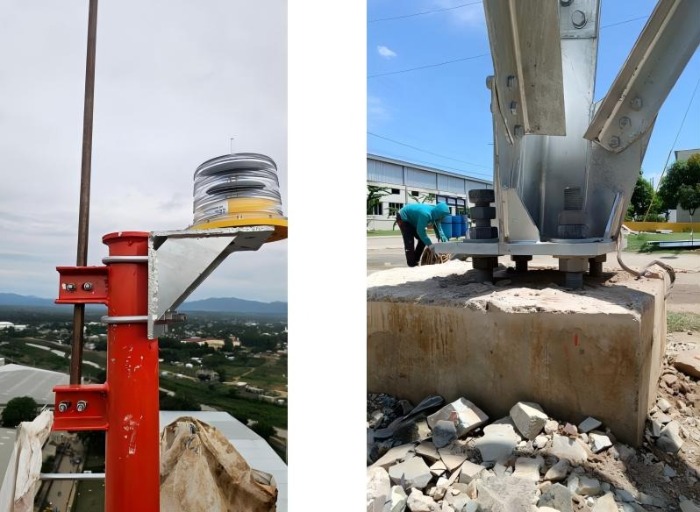
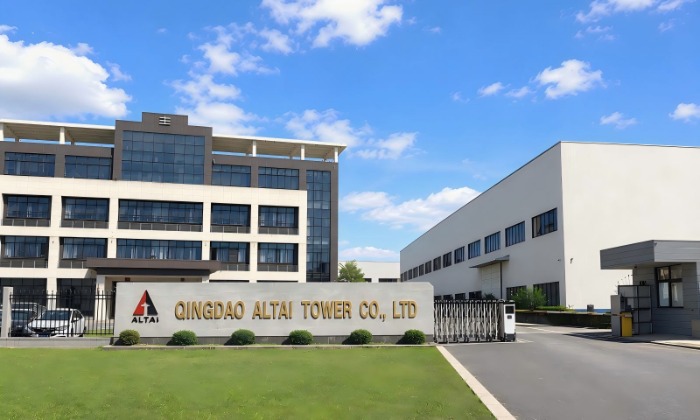
Qingdao Altai Tower Co., Ltd. is a professional manufacturer of telecommunication towers, power towers, and tower accessories, established in 2003. The company specializes in the design, manufacturing, and installation of steel towers, with products exported to more than 100 countries and regions.
| Capability | Specification |
|---|---|
| Rolled section processing | CNC angle production lines for punching and cutting standard angles |
| Built-up member fabrication | 4000-ton hydraulic CNC bending machine for high-strength, high-precision components |
| Welding | AWS D1.1-compliant welding for built-up section assembly |
| Galvanizing | In-house workshop with Italian equipment, strictly following ASTM A123 |
| Quality control | Full traceability; trial assembly verification |
| Lead time | 30 days after payment |
Qingdao Altai Tower applies hybrid fabrication principles through:
· Section optimization:Selecting the most efficient section type (rolled or built-up) for each structural role based on load analysis
· High-strength steel integration:Using Q345B and Q420 grades to achieve weight savings in critical members
· CNC precision:Ensuring accurate connections for both rolled and built-up members
· Trial assembly:Verifying that hybrid designs assemble correctly before shipment
| Parameter | Hot-Rolled Angle | Built-Up Member |
|---|---|---|
| Fabrication complexity | Low—standard mill production | Higher—welding, drilling, assembly required |
| Material cost | Lower per unit weight | Higher per unit weight (additional fabrication) |
| Section size range | Limited to mill capabilities (up to ~300mm leg) | Virtually unlimited—can be designed for any required capacity |
| Lead time | Shorter—readily available | Longer—custom fabrication required |
| Quality consistency | High—controlled mill conditions | Depends on fabrication quality; more potential for defects |
| Design rules | Well-established; covered in all major codes | Maturing; specific rules in ASCE/SEI 10-15 and ANGELHY recommendations |
| Weight efficiency | Good for standard loads | Excellent for high loads—material only where needed |
| Best application | Bracing, secondary members, moderate loads | Primary legs, very high compression loads, strengthening |
Hybrid fabrication—the strategic combination of standard hot-rolled angles and built-up members—represents a sophisticated evolution in lattice tower design. By applying rolled sections where they are most economical and built-up members where capacity demands it, engineers can achieve towers that are:
Structurally efficient:Meeting all load requirements with optimized material usage
Cost-effective:Minimizing both material and fabrication costs
Adaptable:Addressing capacity gaps where standard sections are insufficient
Future-proof:Capable of strengthening existing towers without complete replacement
Research projects like ANGELHY have provided the design rules and validation needed to implement hybrid designs with confidence. High-strength steels such as Q420 and S460 further amplify the benefits, enabling weight reductions of up to 20%.
Para los propietarios de proyectos e ingenieros, la elección es clara: ya no es necesario depender exclusivamente de elementos laminados o compuestos. La fabricación híbrida ofrece la solución óptima —utilizando el tipo de elemento adecuado, en la ubicación precisa y con el grado de acero idóneo— para construir torres más resistentes, ligeras y rentables.
¿Listo para optimizar el diseño de su torre con fabricación híbrida? Póngase en contacto hoy mismo con el equipo de ingeniería de Qingdao Altai Tower para obtener optimización de secciones personalizadas, integración de acero de alta resistencia y una propuesta detallada.



 Red IPv6 compatible