
 English
 français
 русский
 العربية
Buscar
Qué estás buscando?
Buscar

La densidad variable de arriostramiento es una estrategia de diseño que adapta el espaciamiento y la configuración de los elementos diagonales de arriostramiento a lo largo de la altura de una torre de acero angular para ajustarse a la demanda estructural real en cada elevación. El principio es sencillo: concentrar el arriostramiento donde las fuerzas son más altas (la parte inferior) y reducirlo donde la demanda es menor (la parte superior). Al adaptar la densidad de arriostramiento a la distribución de fuerzas internas, que sigue el diagrama de momento flector de una viga en voladizo, los ingenieros pueden lograr la rigidez y estabilidad requeridas sin la penalización de peso del arriostramiento uniforme. Este enfoque puede reducir el consumo de acero entre un 10 y un 25 % en comparación con diseños convencionales con densidad de arriostramiento uniforme, manteniendo o incluso mejorando el rendimiento estructural. Las investigaciones han demostrado que los sistemas de arriostramiento optimizados pueden reducir significativamente la cantidad de material de acero utilizado mientras mejoran la relación peso-rigidez de las torres reticuladas.
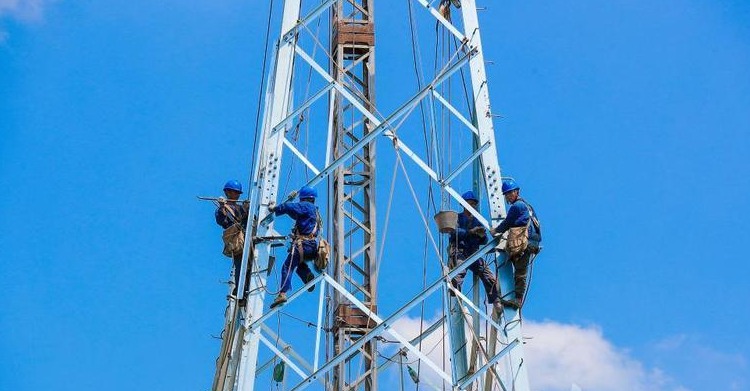
Las fuerzas disminuyen con la altura: El momento flector en una torre en voladizo es máximo en la base y se aproxima a cero en la parte superior; la demanda de arriostramiento sigue el mismo patrón
La densidad variable coincide con la demanda: Un arriostramiento denso en la parte inferior proporciona resistencia y estabilidad donde se necesita; un arriostramiento más espaciado en la parte superior ahorra peso sin comprometer el rendimiento
Se pueden combinar múltiples patrones de arriostramiento: Una sola torre puede utilizar diferentes tipos de arriostramiento en distintas elevaciones; por ejemplo, doble K en la base, arriostramiento en K en la zona media y arriostramiento en X en la parte superior
El ahorro de material es considerable: Las configuraciones de arriostramiento optimizadas pueden reducir el peso de la torre entre un 10 y un 25 % en comparación con diseños de densidad uniforme
Mejora la relación rigidez-peso: Los estudios de optimización topológica han demostrado de forma constante que los sistemas de arriostramiento altamente optimizados producen una mejor relación peso-rigidez
La selección del tipo de arriostramiento es importante: Los estudios que comparan diferentes sistemas de arriostramiento han identificado el arriostramiento en K como particularmente óptimo para torres reticuladas autoportantes
Una torre reticulada autoportante se comporta fundamentalmente como una viga en voladizo fijada en la base. El momento flector producido por las cargas de viento y equipos es máximo en la cimentación y se reduce a cero en la parte superior. Esta es la idea clave que hace que la densidad variable de arriostramiento sea tanto lógica como eficaz.
En un diseño de densidad uniforme, se aplican el mismo espaciamiento y patrón de arriostramiento desde la base hasta la parte superior. Esto significa que las partes superiores de la torre están sobrediseñadas: contienen más arriostramiento del necesario para resistir las fuerzas que realmente experimentan. El diseño de densidad variable corrige esta ineficiencia al ajustar la concentración de arriostramiento para que coincida con la distribución real de fuerzas.
Los elementos diagonales de arriostramiento cumplen dos funciones principales en una torre reticulada:
1. Estabilidad: El arriostramiento reduce la longitud efectiva sin apoyo de los elementos principales de compresión (patas), evitando el pandeo bajo cargas de compresión
2. Transferencia de cargas: El arriostramiento distribuye las fuerzas laterales (viento, sismo) desde las caras de la torre hacia las patas y hasta la cimentación
La densidad de arriostramiento requerida es directamente proporcional a la magnitud de estas fuerzas. En la base, donde las fuerzas son mayores, el arriostramiento debe ser denso y robusto. Cerca de la parte superior, donde las fuerzas disminuyen, un arriostramiento más espaciado puede proporcionar una estabilidad adecuada.
Un enfoque práctico para la densidad variable de arriostramiento divide la torre en secciones verticales (normalmente de 5 a 10 metros cada una) y asigna una configuración de arriostramiento a cada sección según las fuerzas internas calculadas. Un estudio de caso de una torre de 45 metros ilustra este enfoque:
| Sección (desde la parte superior) | Rango de altura | Tipo de arriostramiento | Justificación |
|---|---|---|---|
| 3 secciones superiores | 30–45 m | Arriostramiento en X | Arriostramiento más ligero; menores fuerzas en la parte superior |
| 4 secciones intermedias | 10–30 m | Doble arriostramiento en K | Densidad moderada para fuerzas intermedias |
| 2 secciones inferiores | 0–10 m | Doble arriostramiento en K1 | Mayor densidad; fuerzas máximas en la base |
Este enfoque graduado garantiza que cada sección de la torre esté arriostrada adecuadamente para las fuerzas que realmente experimenta.
Los diferentes patrones de arriostramiento ofrecen distintos compromisos entre rigidez, peso y facilidad de construcción. La investigación sobre diversos sistemas de arriostramiento, incluidos los tipos K, KD, Y, YD, D, XB y X, ha identificado que el arriostramiento en K tiende a ser el diseño más óptimo entre las configuraciones comunes.
| Tipo de arriostramiento | Características | Mejor aplicación |
|---|---|---|
| Arriostramiento en X (arriostramiento cruzado) | Simple, eficaz en tensión y compresión; uso moderado de material | Secciones superiores donde las fuerzas son menores |
| Arriostramiento en K | Proporciona buena rigidez con un dimensionamiento eficiente de los elementos; ampliamente adoptado como óptimo | Secciones intermedias |
| Doble arriostramiento en K | Mayor redundancia y rigidez; mayor uso de material | Secciones inferiores con fuerzas elevadas |
| Arriostramiento en W | Opción rentable y competente | Donde se prioriza la economía |
La densidad variable del arriostramiento no solo se refiere al espaciamiento, sino que también implica ajustar los tamaños de los elementos. En las secciones inferiores, donde las fuerzas son máximas, los elementos de arriostramiento pueden utilizar perfiles angulares más grandes (p. ej., 200×200×20). A medida que las fuerzas disminuyen con la altura, se pueden utilizar perfiles más pequeños (p. ej., 150×150×12) en las secciones superiores. Este dimensionamiento graduado de los elementos complementa el enfoque de densidad variable, optimizando aún más el uso del material.
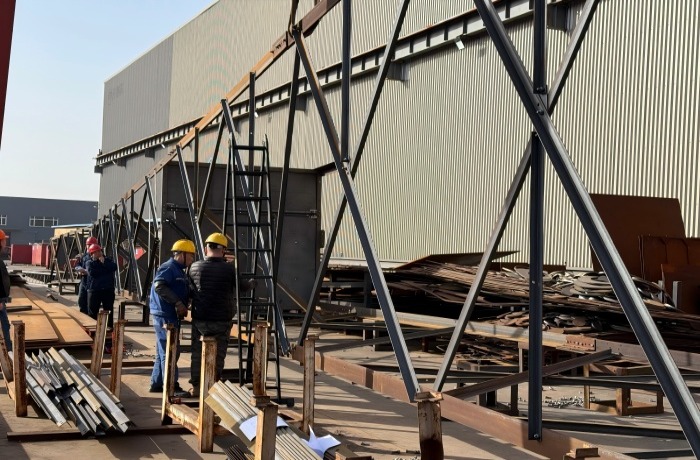
La principal ventaja de la densidad variable del arriostramiento es lograr la rigidez estructural requerida con menos material. La investigación sobre la optimización del espaciamiento de las patas ha demostrado que proporcionar una mayor distancia entre las patas mientras se optimizan los elementos estructurales da como resultado una mayor rigidez a flexión y un menor peso propio de la estructura.
Los estudios de optimización topológica han confirmado además que los sistemas de arriostramiento altamente optimizados reducen la cantidad de material de acero utilizado mientras mejoran la relación peso-rigidez de las torres reticuladas.
La función más crítica del arriostramiento, especialmente en las secciones inferiores de una torre alta, es prevenir el pandeo de las patas principales. Al concentrar el arriostramiento donde las fuerzas de compresión son más elevadas, el diseño de densidad variable garantiza que la longitud efectiva sin arriostramiento de las patas se minimice en la base, donde más importa. Este enfoque específico proporciona una resistencia al pandeo superior en comparación con los diseños de densidad uniforme, que pueden sobrerreforzar la parte superior mientras dejan con un arriostramiento insuficiente las secciones inferiores críticas.
Los ahorros de material derivados de la densidad de arriostramiento variable son sustanciales. Los estudios sobre la optimización de torres de transmisión han encontrado reducciones de peso del 14–24% mediante diseños optimizados. Para una torre de telecomunicaciones típica de 45 metros, esto puede traducirse en varias toneladas de acero ahorradas por torre, una reducción significativa tanto del costo de material como de la huella de carbono.
La implementación de una densidad de arriostramiento variable requiere un enfoque analítico riguroso:
· Determinación de cargas: Calcular las cargas de viento, hielo y equipos según las normas aplicables (TIA-222, ASCE 7 o códigos locales)
· Análisis de distribución de fuerzas: Determinar las fuerzas internas (axiales, cortantes y momentos) en cada sección de la torre
· Diseño de arriostramiento sección por sección: Especificar el tipo de arriostramiento, el espaciamiento y los tamaños de los elementos para cada sección según las fuerzas calculadas
· Verificación de estabilidad: Comprobar que las longitudes efectivas sin arriostramiento y las capacidades de pandeo cumplen los requisitos de diseño
· Análisis de deflexión y dinámica: Verificar que la torre optimizada cumple los requisitos de servicio y frecuencia natural
El software moderno de análisis estructural permite una optimización sofisticada de las configuraciones de arriostramiento. El análisis de elementos finitos (FEA) puede modelar la torre completa e identificar la configuración óptima de arriostramiento para cada sección. Las técnicas de optimización topológica se han aplicado con éxito a torres reticuladas de telecomunicaciones, produciendo sistemas de arriostramiento altamente optimizados con mejores relaciones peso-rigidez.
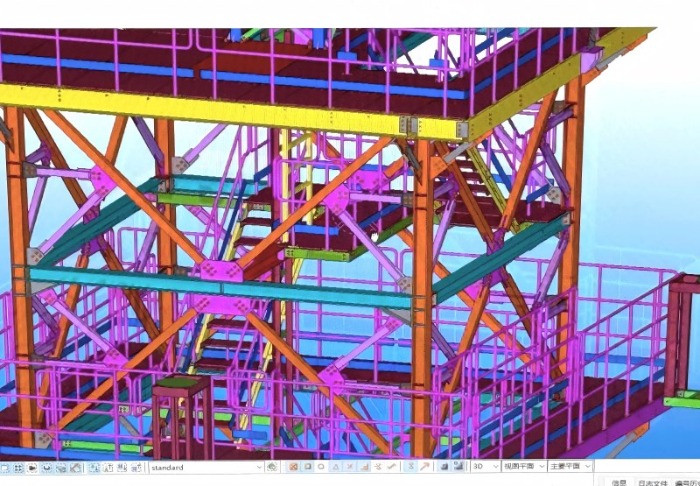
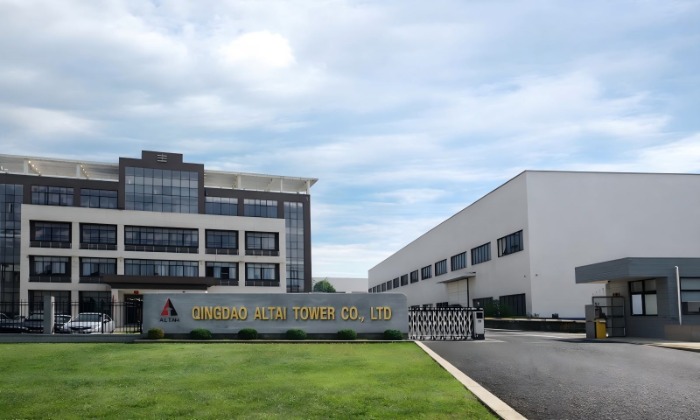
Qingdao Altai Tower Co., Ltd. es un fabricante profesional de torres de telecomunicaciones, torres eléctricas y accesorios para torres, establecido en 2003. La empresa se especializa en el diseño, fabricación e instalación de torres de acero, con productos exportados a más de 100 países y regiones.
Qingdao Altai Tower aplica principios de densidad de arriostramiento variable en sus diseños de torres reticuladas mediante:
· Optimización sección por sección: Cada torre se divide en secciones con configuraciones de arriostramiento adaptadas a la distribución de fuerzas calculada
· Integración de múltiples tipos de arriostramiento: Combinación de arriostramientos en X, en K y en doble K en diferentes elevaciones para optimizar la relación rigidez-peso
· Biblioteca de diseños prediseñados: Amplia biblioteca de diseños precertificados para diversos requisitos de altura (normalmente de 15–80 metros) y capacidades de carga
· Fabricación de precisión CNC: La máquina dobladora hidráulica CNC de 4000 toneladas permite la fabricación precisa de configuraciones complejas de arriostramiento
· Galvanizado interno:El galvanizado por inmersión en caliente según ASTM A123 garantiza la protección contra la corrosión de todos los elementos de arriostramiento
| Capacidad | Especificación |
|---|---|
| Capacidad de producción | 3.000 toneladas métricas por mes |
| Galvanizado | Taller interno con equipos italianos, siguiendo estrictamente ASTM A123 |
| Plazo de entrega | 30 días después del pago |
| Certificaciones | ISO 9001, ISO 14001, ISO 45001, CE |
| Normas de diseño | ANSI/TIA-222-H, GB/T 2694, AWS D1.1 |
Qingdao Altai Tower integra la verificación de calidad durante todo el proceso de fabricación, incluida la prueba de montaje de las secciones de torre terminadas para verificar la precisión dimensional y el ajuste de los arriostramientos antes de la galvanización y el envío.
| Parámetro | Densidad de arriostramiento uniforme | Densidad de arriostramiento variable |
|---|---|---|
| Espaciado de arriostramientos | Constante desde la base hasta la parte superior | Denso en la parte inferior; más espaciado en la parte superior |
| Dimensionamiento de elementos | Mismo tamaño en toda la estructura | Mayor en la parte inferior; menor en la parte superior |
| Uso de material | Mayor (secciones superiores sobrediseñadas) | Menor (ahorro del 10–25%) |
| Distribución de rigidez | Uniforme pero ineficiente | Adaptada a la demanda |
| Resistencia al pandeo | Sobrediseñada en la parte superior; potencialmente subdiseñada en las secciones críticas de la base | Concentrada donde más se necesita |
| Complejidad de construcción | Más simple (detalles repetitivos) | Más compleja (múltiples patrones) |
| Costo | Mayor costo de material | Menor costo de material; costo de ingeniería ligeramente mayor |
| Huella de carbono | Mayor | Menor |
La densidad variable de arriostramiento representa una evolución sofisticada en el diseño de torres reticuladas: un enfoque que reconoce la física fundamental de cómo las torres soportan cargas y optimiza el uso de materiales en consecuencia. Al concentrar el arriostramiento donde las fuerzas son más elevadas (la parte inferior) y reducirlo donde la demanda es menor (la parte superior), los ingenieros pueden lograr la rigidez y estabilidad requeridas utilizando significativamente menos acero.
El enfoque está respaldado por investigaciones extensas que demuestran que los sistemas de arriostramiento optimizados mejoran las relaciones entre peso y rigidez y reducen el consumo de material. Los estudios sobre la optimización de torres de transmisión han encontrado reducciones de peso del 14–24 % mediante un diseño optimizado.
Para los propietarios de proyectos y los ingenieros, la elección es clara: invertir en el diseño con densidad variable de arriostramiento en la etapa de planificación para lograr torres más ligeras y rentables sin comprometer el rendimiento estructural. En una industria donde los costos de materiales y la sostenibilidad son cada vez más importantes, la densidad variable de arriostramiento no es solo una optimización, sino una ventaja competitiva.
¿Está listo para optimizar el diseño de su torre con densidad variable de arriostramiento? Contacte hoy con el equipo de ingeniería de Qingdao Altai Tower para obtener un análisis de diseño personalizado y una propuesta detallada.



 Red IPv6 compatible