

 English
 français
 русский
 العربية
Buscar
Qué estás buscando?
Buscar

Para los operadores de red, la implementación de una Cellular on Wheels (COW) is a strategic move to capture event revenue, provide emergency coverage, or fill network gaps. However, the operational economics of a COW are often dominated by a single, persistent line item: energy cost. The traditional model of relying solely on a continuously running diesel generator is not only expensive but also noisy, high-maintenance, and environmentally unsustainable. To achieve true cost-effectiveness and operational flexibility, a paradigm shift towards intelligently designed hybrid energy systems is essential. This approach leverages multiple power sources and storage to dramatically reduce fuel consumption, lower maintenance costs, and minimize the total cost of ownership (TCO) over the COW's lifecycle.
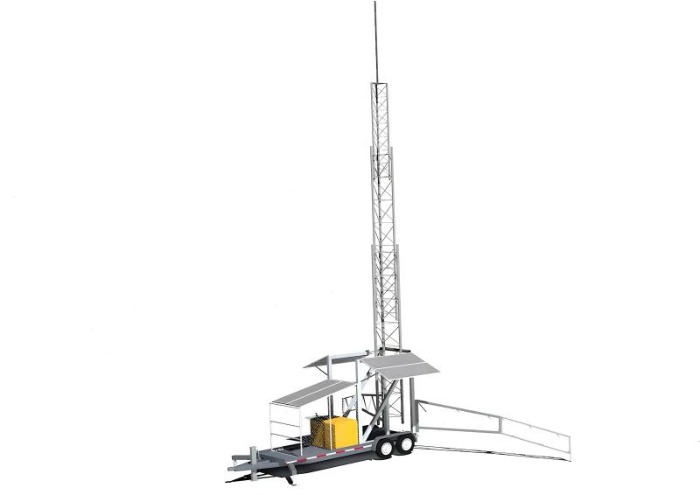
A standard COW powered 24/7 by a diesel generator faces several financial and operational penalties:
· Excessive Fuel Consumption : A generator sized for peak load (e.g., during busy hours with active cooling) operates highly inefficiently at low load for most of the day, leading to wasted fuel and increased carbon emissions.
· High Maintenance Frequency : Continuous operation directly correlates to shorter maintenance intervals for oil changes, filter replacements, and major overhauls, as measured by running hours.
· Unreliable Fuel Logistics : In remote or disaster scenarios, securing a reliable diesel supply chain is costly, risky, and can compromise mission continuity.
· Noise and Environmental Footprint : The constant drone limits deployment options in noise-sensitive areas (residential zones, golf courses) and conflicts with corporate sustainability goals.
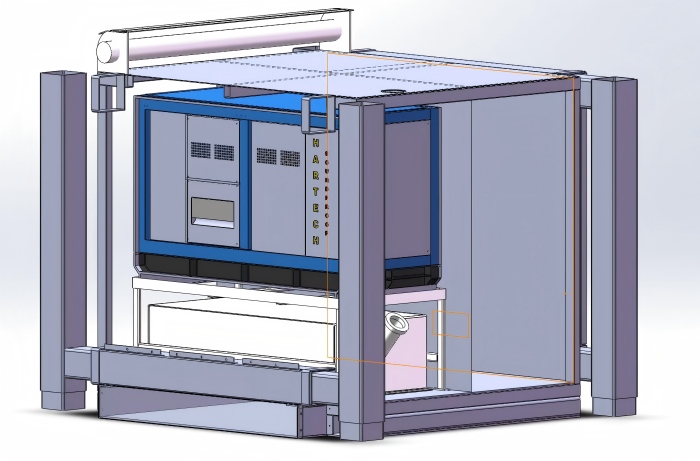
A modern hybrid system is designed as an integrated power plant, not a collection of independent parts. Its core intelligence lies in a programmable power controller that dynamically manages energy flow based on load demand, battery state of charge, and available renewable input. The optimal architecture typically consists of three key layers:
1. The Primary Source: A Right-Sized Diesel Generator
The paradigm shifts from a generator that runs constantly to one that operates only as a high-efficiency battery charger.
Sizing Strategy: The generator is sized not for peak COW load (e.g., 15-20 kW), but for the average daily energy consumption. A smaller, 5-8 kW generator running at 80-90% of its rated capacity is far more fuel-efficient and lasts longer than a large generator idling at 30% load.
Operating Profile: It is programmed to start only when the battery bank reaches a low-state-of-charge threshold, run at its optimal load point until the batteries are recharged, and then shut down. This reduces runtime from 24 hours/day to potentially 4-8 hours/day.
2. The Energy Buffer & Primary Workhorse: A Lithium-Ion Battery Bank
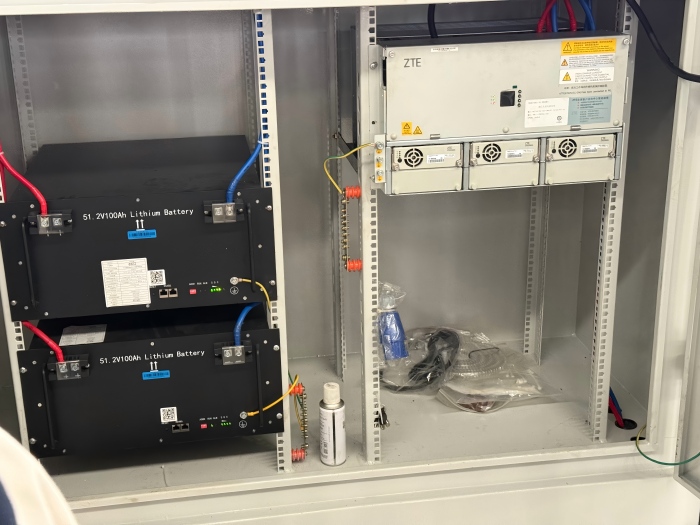
This is the heart of the cost-saving model. The battery bank supplies all power to the COW's load for the majority of the time.
Technology Choice: Lithium Iron Phosphate (LFP) batteries are preferred over traditional lead-acid due to their longer cycle life (3000+ cycles), higher usable depth of discharge (DoD) of 80-90%, faster charging acceptance, and minimal maintenance. This translates to a lower cost per cycle over the system's life.
Sizing Calculation: The bank is sized to carry the COW's load for the target "generator-off" period (e.g., 12-16 hours), considering the site's load profile and the batteries' usable capacity. This directly determines fuel savings.
3. The Cost-Reduction Layer: Integrated Solar PV Input
A pre-wired, plug-and-play interface for solar panels transforms the system from a fuel-saving to a fuel-avoidance asset.
Design Philosophy: The system is not necessarily sold with panels but is "solar-ready." It includes a compatible charge controller, DC input ports, and mounting provisions. For sunny deployments (sporting events, rural areas), operators can deploy lightweight, foldable PV arrays.
Economic Impact: Solar input during daylight hours directly offsets generator runtime. In favorable conditions, it can keep the batteries charged, allowing the generator to remain off for multiple days, eliminating both fuel and runtime maintenance costs entirely.
The financial impact of the hybrid system is profound and multi-faceted.
| Cost Factor | Traditional Generator-Only System | Intelligent Hybrid System (Gen + Bat + Solar-Ready) | Financial Impact |
|---|---|---|---|
| Fuel Consumption | High & Constant. ~15-25 L/day for a 10kVA gen at low load. | Reduced by 60-80%. Generator runs only to recharge batteries. Solar can reduce this further. | Direct OPEX saving of thousands annually per COW. |
| Generator Maintenance | Frequent. Service every 250-500 running hours. | Infrequent. Runtime reduced by 2/3, stretching service intervals to match calendar months, not hours. | Lower parts/labor costs, less downtime for service. |
| Generator Capital/Rental | Requires a larger, more expensive unit for peak load. | A smaller, less expensive generator suffices. Reduces rental costs if not owned. | Lower CAPEX or opex rental fees. |
| Noise & Site Flexibility | Limited to areas tolerant of constant noise. | Quiet battery operation enables premium, noise-sensitive sites (parks, neighborhoods). | New Revenue Streams: Access to higher-value deployment venues. |
| Mission Assurance | Total dependency on fragile fuel supply chain. | 12-24 hours of inherent battery backup provide resilience during fuel logistics interruptions. | Risk Mitigation: Avoids revenue loss and SLA penalties from unexpected outages. |
Illustrative Case: A 3-Carrier COW at a Weekend Festival
Load: 1.2 kW continuous (RRUs, baseband) + 2.5 kW cyclic (AC cooling).
Traditional: A 10kVA generator runs 72 hours continuously, consuming ~180 liters of diesel.
Hybrid: A 5kVA generator runs 6 hours/day to recharge a 20kWh LFP battery bank. Total runtime: 18 hours. Fuel consumed: ~54 liters.
Savings: 70% fuel reduction (126 liters saved). Generator maintenance intervals are extended 4-fold. With added solar, daytime generator starts could be eliminated entirely.
To realize these savings, the system must be correctly engineered:
Intelligent Controller: The brain of the system must manage generator auto-start/stop, multi-stage battery charging, solar MPPT, and load prioritization seamlessly.
Thermal Management: Battery performance and lifespan are tied to temperature. The cabinet must include proper ventilation or cooling to keep LFP batteries within their ideal 15-25°C operating range.
Monitoring & Telemetry: Remote monitoring of fuel level, battery state of charge, generator hours, and solar yield is crucial for proactive management and optimizing deployment strategies.
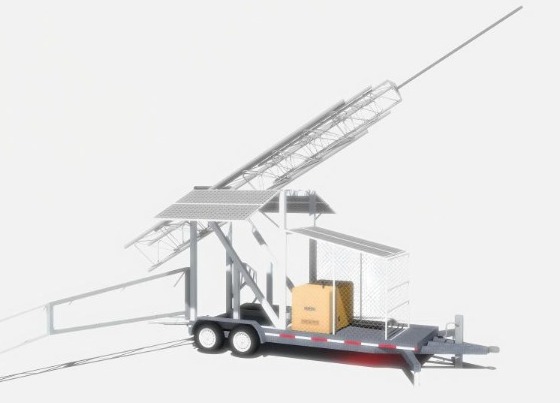
Transitioning to a hybrid energy system for COWs is not merely an equipment upgrade; it is a strategic investment in operational efficiency and cost predictability . By right-sizing the generator, leveraging high-cycle-life lithium batteries, and providing a path for solar integration, network operators can directly attack their largest operational expense. The result is a dramatic reduction in fuel and maintenance costs, enhanced deployment flexibility, and a more sustainable, resilient asset. In an industry where margin control is critical, powering your COW for less is a decisive competitive advantage.
Learn more at https://www.alttower.com/cellular-on-wheels-cow_c2



 Red IPv6 compatible